
 Ever since Donald Trump won the presidential election, there is deep worry, interest and curiosity about his policies and how they will impact the nation. More specific information is being rolled out each day that grabs headlines and eyeballs not just in the United States but the world over. Even before he has officially assumed office, Donald Trump, as president elect has begun affecting key policies, one such that gained attention was their education policy.
Donald Trump’s team is of the belief that their public education system has collapsed because the system offers them no competition. To change this, their policies will center around 3 points – end Common Core, providing parents with choice of school and removal of the federal government hand from the student loaning system.
The way they see it, this empowers parents to choose a school right for their children from the existing  private, charter or public schools and create healthy competition for public schools to excel. They have no other choice but to shape up ship out.
The new policy plans to re-appropriate $20 billion amassed as education funds into vouchers of around $12,000 for parents to avail at a public, private or charter school. The policy also expects the state to chip in with funds nearly five times more than what the federal government doled out towards education.
This system has been affected in Indiana by the Vice-President elect, Mike Pence. Consequently some positive changes were noticed. The overall grade of the state had increased in the National Assessment of Educational Progress. But there is no study correlating the two and may well be an independent accomplishment by schools. No findings revealed that the voucher policy impacted the health of the school system.
There are some initial studies confirming however those students who switched from public to private schools had scored poorly in math.
People have no clues what to conclude. Discussions are still very much underway about its pros and cons. There are no predictions from experts whether the stand taken by the policy makers will pay off.
Read More : Newspaper in Education Week Design An Ad Contest
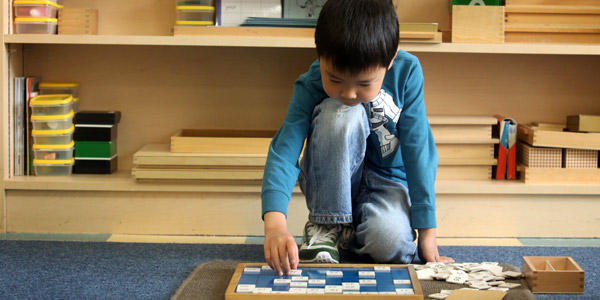
 were bilingual had superior capabilities in learning and cognition in comparison to those who knew only one language. The last twenty years has seen enormous activity in bilingual research to understand the workings of the brain more precisely.
 When it comes to subjects such as math and science, students of Singapore excel in them in comparison to students from any other country. A formal assessment was made by Trends In International Mathematics and Science Study (TIMSS) in which approximately 60 countries participate. The countries considered supremely advanced in math and science such as the United States fared lower than students from Singapore. This has always been the trend. To understand this, a study was conducted on how schools in Singapore were different in their teaching approach in comparison to the US. Here are a few findings.
 is centered around understanding a set of core concepts on which more knowledge is acquired and built every year. Memorization, like in the US schools is not encouraged but an understanding of subjects like math and science through power of reasoning is taught. All over the world these two subjects are considered esoteric and are only taken up by children who have a natural tendency to understand them better.